|
|
 |
Fishing is the
most common sport in the Queen
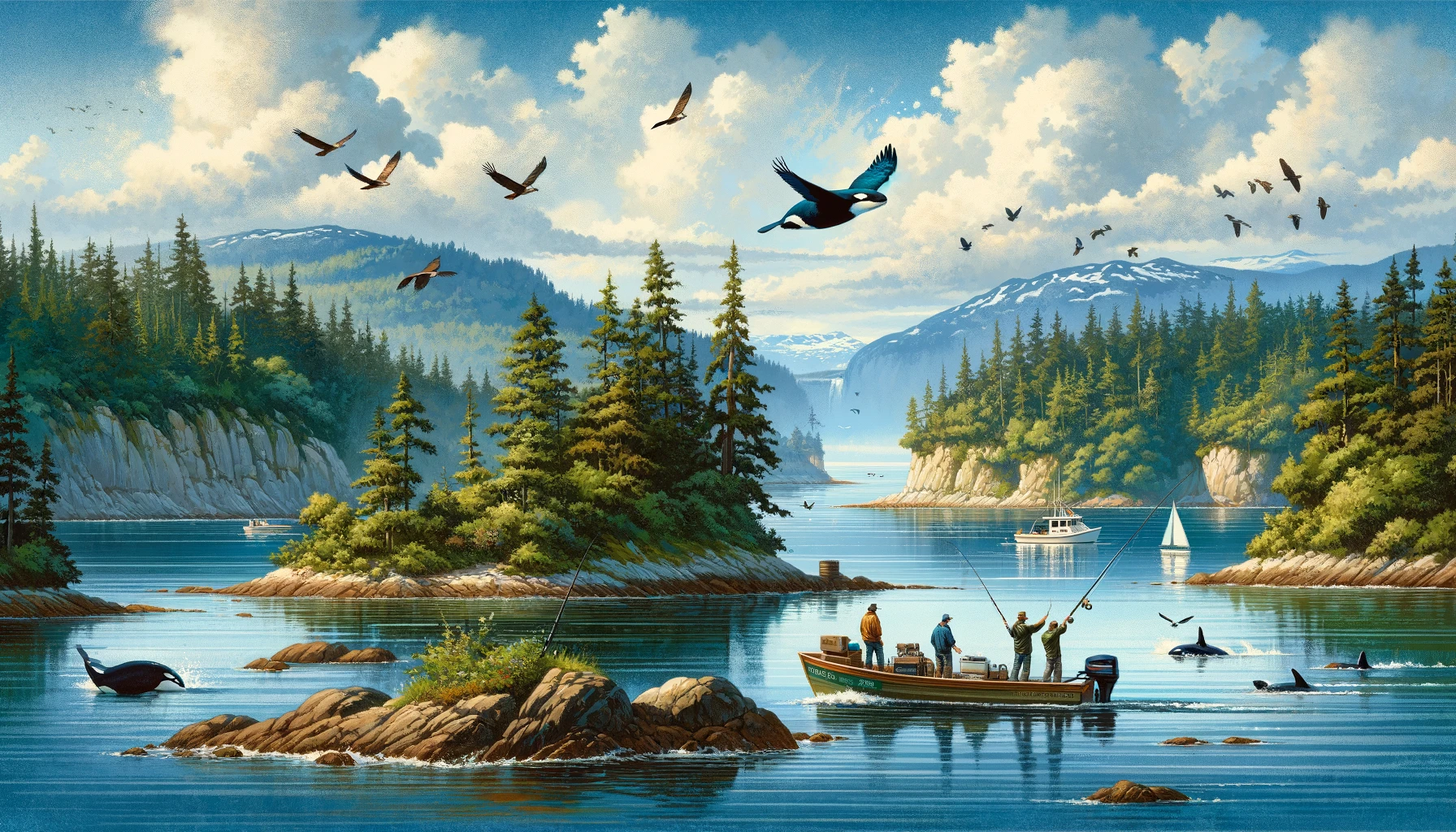
Charlotte Islands, and fishing is exceptional year-round fishing.
Anglers are drawn by the world-class salmon fishing, as the island
archipelago is the first land mass on the migratory path of the Pacific
chinook, coho, and chum salmon as they journey from the Arctic feeding
grounds to their spawning grounds in the Pacific Northwest.
The fishing potential in the Queen Charlotte Islands requires very
little introduction, there being ready access to superb freshwater
and saltwater fishing. Salmon fishing is seasonal. Fishing for just
about everything else is a year-round sport. Catch cutthroat, rainbow
trout, or dolly varden inland, or get out onto the ocean to jig for
lingcod, red snapper, or halibut. Anglers fishing for halibut have
been known to swamp their small boats while trying to land these potentially
huge fish, so be careful if you snag a big one.!
On many streams, high tide can easily push inland a mile (1.6 km)
or more. As catch limits vary for tidal and non-tidal waters, tidal
boundaries are posted on streams where regulations are subject to
change.
Graham Island
At the head of Virago Sound, off Dixon Entrance on the northern coast
of the Queen Charlotte Islands, is pristine Naden
Harbour, the remote location favoured by fishing lodges that attract
sports anglers to the world-class salmon fishing offered by the islands.
This location on the northeast coast of Queen Charlotte islands is
ideal to intercept all runs of Pacific Salmon southbound for the rivers
of British Columbia to the south. Besides the five species of salmon,
halibut and other bottom fish are also in abundance throughout the
fishing season (June through mid-September), as well as crabs and
prawns. In addition to some of the finest fishing in the world, visitors
to this remote wilderness, anglers and non-anglers alike, enjoy an
unparalleled sense of peace and tranquility, and develop a strong
appreciation for the beautiful surroundings.
Langara Island is one of
the three premier fly-in saltwater fishing locations in British Columbia.
The logging camps, fishing camps and settlements on Langara Island
are serviced by scheduled or charter flights out of Alliford Bay on
Moresby Island.
Remote fishing lodges are located at Port
Louis, offering excellent fishing for Salmon and Halibut, or fishing
for Tuna 15 miles offshore. Amidst unparalleled scenic beauty, and
some of the most rugged shoreline on the west coast of the Queen Charlotte
Islands, Port Louis serves as a comfortable home base for adventurers
seeking world-class sports fishing. There are no communities in this
part of the remote coastline, only remote fishing lodges and sport
fishing motherships catering to the avid sport fisherman.
Fishing in Rennell Sound
and the west coast of the islands is very productive, with Springs
caught in May through September, and Halibut and other bottom fish
generally present throughout the year. Sport fishing is the main attraction,
and Chinook salmon are the main target species for most anglers, although
catches of halibut, lingcod, and rockfish are also great. Anglers
in Rennell Sound will find a boat launch located in Shields Bay, at
the head of the sound, a much-favoured shelter for fishing boats.
Sport fishing is the main attraction of Kano
Inlet, and Chinook salmon are the main target species for most
anglers, although catches of halibut, lingcod, and rockfish are also
great. Those seeking comfort and expert fishing guides are accommodated
on a luxurious vessel anchored in Kano Inlet, the neighbouring inlet
immediately to the south of Rennell Sound.
In Masset, fishermen should
try their skills at Hiellen River, Sangan River or Chown
River. If you don't have a fishing rod, you can try your hand
(and shovel) at digging for razor clams (a 12-clam-per-person
limit is in effect; no licence needed) at low tide at North
Beach in Naikoon
Provincial Park. The clams are found between the high and low
tide lines. Quarter-sized depressions in the sand show where clams
most likely are. If the sand moves when tapped, there's a clam below.
The trick is to dig fast enough to catch up with the clam, which is
burrowing for safety. It takes a few tries to get the hang of it,
and you have to be quick; these puppies are fast.
There's a boat launch at Mayer Lake in Naikoon Provincial Park
and wilderness camping along the lakeshore for people making extended
fishing voyages. Mayer Lake and Tlell River are the most accessible
freshwater fishing spots in Naikoon, near Tlell.
The Tlell River is famous for excellent steelhead fishing, huge fall
runs of coho salmon, and good cutthroat trout fishing during July
and August. Cutthroat fishing from 1 September to 30 June is restricted
to catch and release only, below the Highway 16 bridge. Yakoun
Lake, about 15 miles (25 km) northwest of Queen
Charlotte City, is another popular freshwater fishing destination.
Famous for its steelhead, the Yakoun River, south of Port
Clements and the largest river on Graham Island, sees a good coho
salmon run in the fall, good year-round fishing for rainbow, dolly
varden and cutthroat trout, and a steelhead run
from October to March. Check for regulations on closure, possession
limits and catch and release restrictions. The Yakoun River is the
only stream system on the Queen Charlotte Islands that naturally supports
a chinook salmon stock. This wild stock is enhanced by the efforts
of the Yakoun River (Marie Lake) Fish Hatchery.
West of Port Clements, the Mamin River, which flows into Juskatla
Inlet, supports a good run of coho salmon from mid September to mid
October, and a good steelhead run from January to March. The Port
Clements Salmon Enhancement Club works on the Mamin River and provides
Yakoun River chinook to the Port Clements school feeding and release
program.
Fishing in the Skidegate Inlet is very productive, between
Graham and Moresby Islands, and between Queen Charlotte City and Skidegate.
Try your luck off the small island near the museum at Second Beach,
for springs and halibut.
Moresby Island
Fishing is excellent in the Sandspit
area, with bluejacks, springs and halibut caught off Sandspit Bar
and Sachs Creek, which flows to Kwuna Point just before
the ferry landing, and pinks and coho are caught in South Bay
and Haans Creek. The Deena River supports a good steelhead
run during early spring, and good coho salmon fishing in October and
November.
The Coho Salmon Derby runs for consecutive weekends at the
end of September, to coincide with the return of the bright silver
coho salmon from the deep Pacific Ocean. The coho derby is open to
anglers of all ages, and is one of the largest on Moresby Island.
Competitors launch at boat ramps at Alliford Bay, Sandspit, Copper
Bay, and Cumshewa Inlet, and fishing is restricted to the region between
Gray Bay and the Deena River, west of Alliford Bay. The popular event
closes with the equally popular Coho Derby Dance.
The best lake fishing on Moresby Island is found in Mosquito Lake
and Skidegate Lake both of which are near Moresby Camp.
Mosquito Lake is closer, about 3 miles (5 km) to the northwest, and
anglers fishing for cutthroat and dolly varden will be relieved to
know that Mosquito Lake was named after the Second World War bomber,
and not the wretched bug. The Pallant River flows out of Mosquito
Lake and has a good steelhead run in the winter and spring months.
Skidegate Lake is about 6 miles (10 km) beyond Mosquito Lake,
and offers good cutthroat fishing during the spring, early summer
and fall months.
Accessible by car from Sandspit, the Copper River offers a
run of sea-run cutthroat and good dolly varden fishing between May
and July. Coho salmon run the Copper River from mid-September to mid-October.
Service and Facilities
Fishing
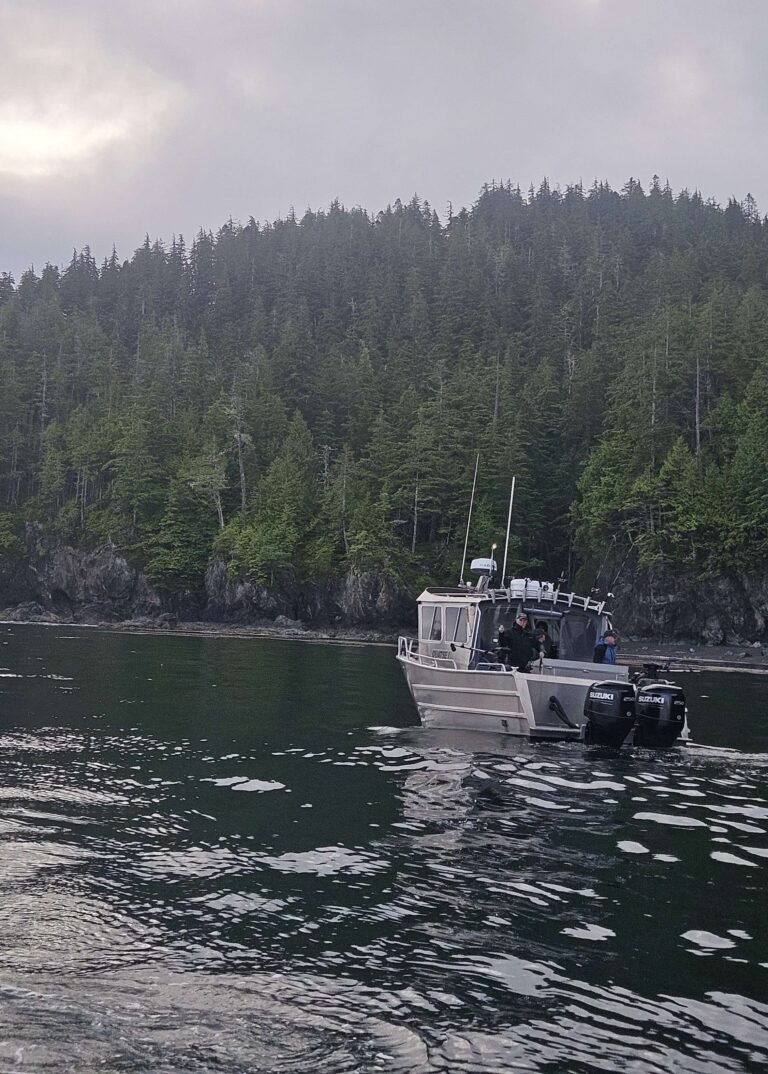
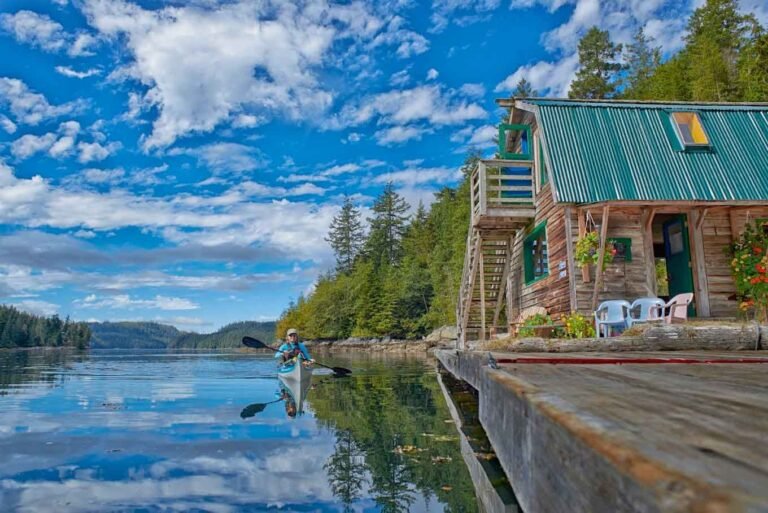
guides abound, and luxurious fishing lodges, floating lodges and sportfishing
motherships provide the ultimate fishing experience in this last frontier.
Most of the fishing spots described are only accessible through private
logging roads. Sportsmen and visitors using these roads should contact
the forestry companies in Juskatla and Sandspit, for access information.
Both saltwater and freshwater fishing licenses are mandatory. Supplementary
licenses are required for steelhead. All fishing licences are available
on the Islands. For regulations, restrictions and further information,
please contact the Queen Charlottes Visitor Info Centre.
A fish canning and freezing plant located on the east shore of Masset
Sound is a significant source of employment in the community, and
a hive of activity during the fishing season. With the downturn in
salmon fisheries, the fish plant in Masset was facing hundreds of
lay-offs until they switched to processing the lowly Dogfish, locally
abundant and a source of high value by-products. The processing plant
offers custom processing, vacuum packing, smoking, freezing and shipping
for locally caught sport fish. Fresh or frozen fish and crabs are
also sold. |
|
|
|