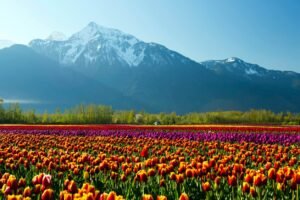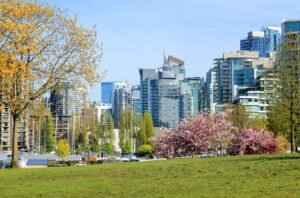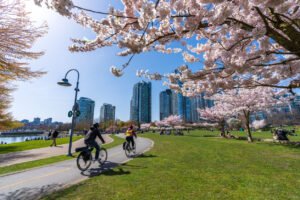
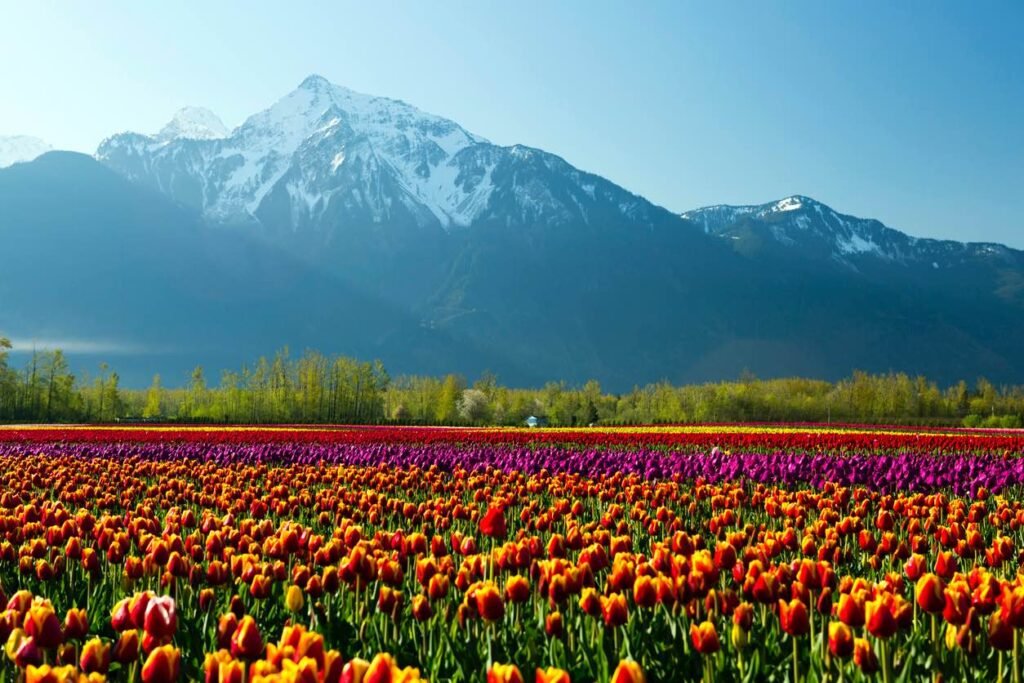
Fraser Valley tulips and Vancouver’s iconic cherry blossoms create a specific moment in early spring when British Columbia’s Lower Mainland transforms into a painting come to life. Vancouver’s streets burst into pink clouds of blossoms while the agricultural fields explode into millions of Fraser Valley tulips in every color imaginable. Suddenly, everyone with a camera, phone or professional, is heading outside to capture these stunning spring flowers at their most photogenic.
If you’ve been enduring months of grey skies and bare branches, late March through April delivers the payoff. This is when BC shows all its colors through the vibrant Fraser Valley tulips, creating some of the province’s most popular seasonal experiences. The combination of Vancouver’s cherry blossoms and the famous Fraser Valley tulip festivals creates agritourism opportunities and spring photography that rival anything North America offers. From urban blossom viewing to expansive fields of Fraser Valley tulips, the diversity of spring flower experiences means everyone finds their preferred way to celebrate the season.
Vancouver Cherry Blossoms: The Urban Spectacle
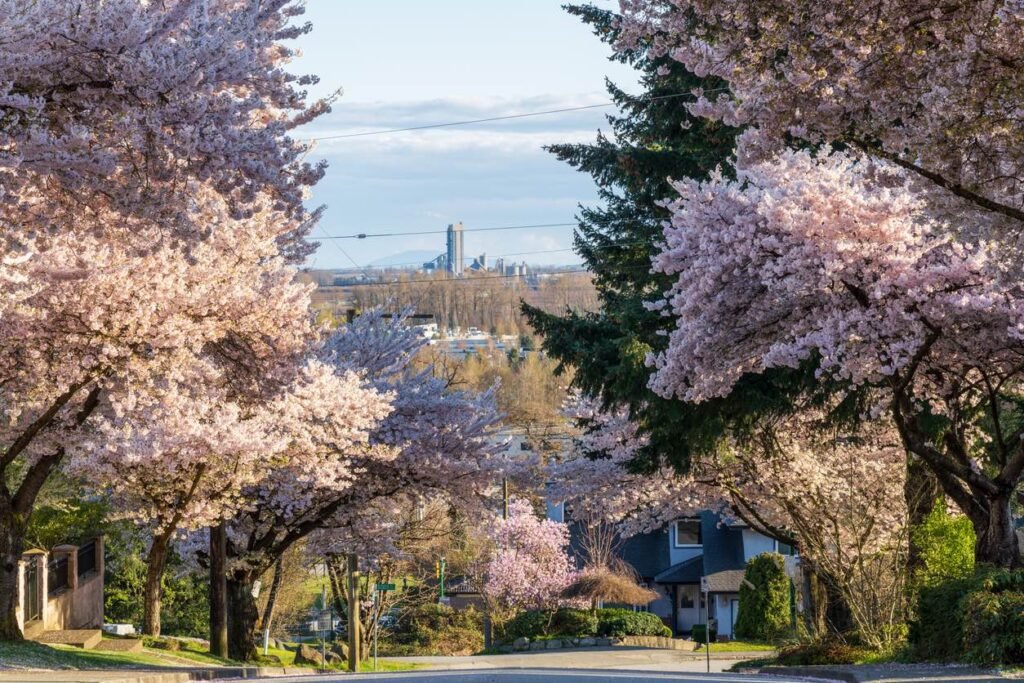
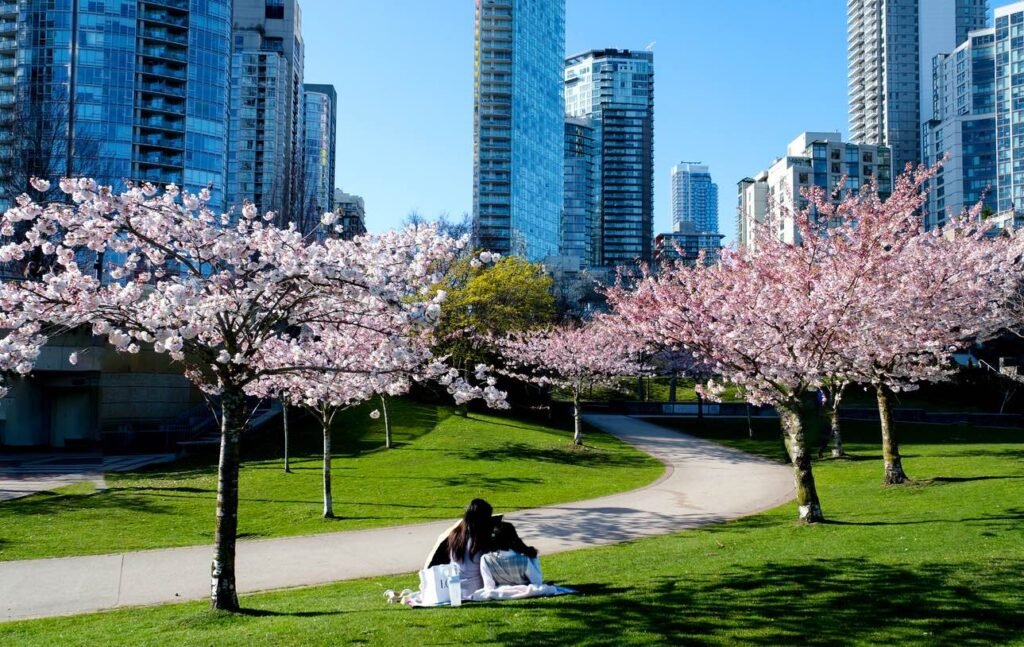
Vancouver hosts over 40,000 ornamental cherry trees throughout the city, creating one of North America’s most impressive urban cherry blossom displays. These aren’t accidental plantings; they’re intentional streetscape design that transforms neighborhoods into temporary works of art.
The Vancouver Cherry Blossom Festival runs March 27 through April 17, 2026, coordinating events and celebrations around peak bloom periods. While blossoms don’t follow exact schedules, weather determines timing, the festival provides a framework for community celebration of this annual phenomenon.
Sakura Days Japan Fair at VanDusen Botanical Garden (April 11-12, 2026) combines cherry blossom appreciation with Japanese cultural celebrations. Tea ceremonies, anime art, Japanese food vendors, sake sampling, and workshops on origami, calligraphy, and ikebana create immersive cultural experiences that go beyond just viewing flowers.
Finding cherry blossoms throughout Vancouver requires no admission fees or advance planning. Streets like Graveley Street between Commercial Drive and Nanaimo Street showcase dramatic tunnel effects where blossoms form canopies overhead. Queen Elizabeth Park, Stanley Park, and countless residential neighborhoods host spectacular trees that neighbors appreciate sharing with photographers and flower enthusiasts.
The ephemeral nature of cherry blossoms adds urgency, peak bloom lasts roughly one week before petals begin falling, creating those famous pink carpets on sidewalks and streets. Checking bloom maps and forecasts helps timing visits to catch blossoms at their absolute peak.
Experience the Magic of Fraser Valley Tulips
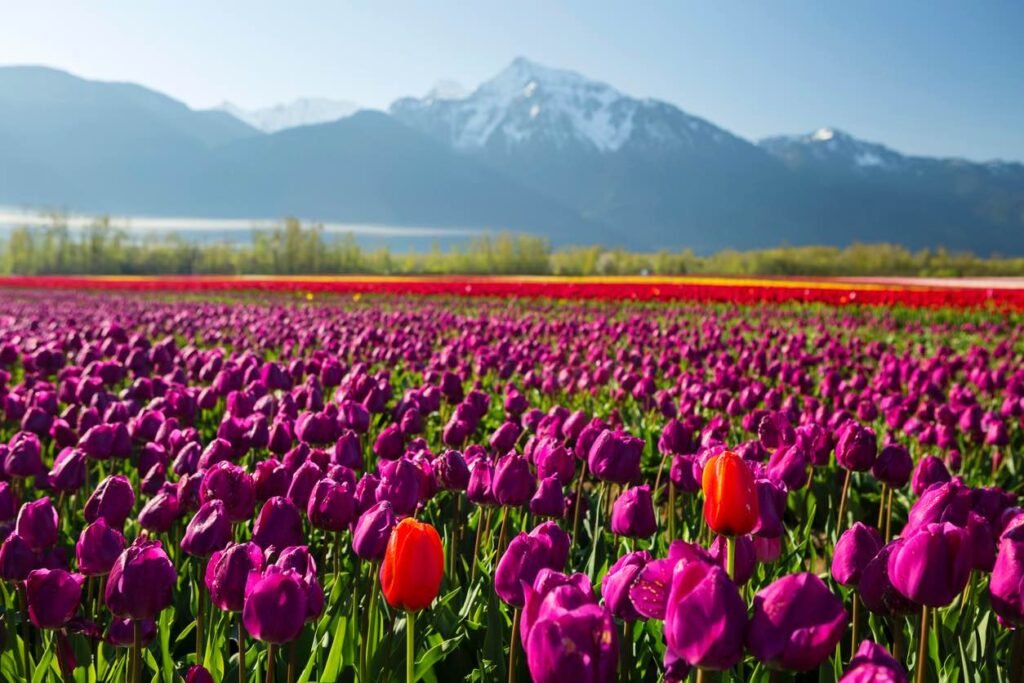
While Vancouver provides free urban flower viewing, the Fraser Valley, roughly an hour east, hosts tulip festivals that operate at jaw-dropping scales. We’re talking millions of tulips planted across dozens of acres, creating landscapes that look photoshopped even when experiencing them in person.
Harrison Tulip Festival: One of Canada’s Largest Display
Harrison Tulip Festival in Agassiz (5039 Lougheed Highway), one of Canada’s largest tulip festivals with over 14 million blooms across 45 acres, including 150+ tulip varieties, 15 types of double daffodils, and 12 hyacinth varieties. While the scale alone deserves appreciation, the thoughtful design, varied heights, color combinations, mountain backdrops, creates photography opportunities widely recognized for its photogenic displays.
The festival typically runs early April through mid-May (exact dates depend on bloom conditions), operating 10am-6:30pm weekdays and 8am-6:30pm weekends, with sunrise openings (6am) on select dates. Tickets range $10-20, with season passes, super passes, and any-day options available.
New for 2026, the Night Garden experience (April 16, 17, 18, 24, 25, from 6-10pm) illuminates the show garden after sunset, transforming familiar daytime landscapes into glowing evening spectacles with lights, music, and food. It’s date-night perfect and offers completely different energy than daytime visits.
The Bloom Bar, another 2026 addition, provides self-serve flower areas where visitors create custom bouquets and flower crowns. Instead of just photographing tulips, you’re taking them home, extending the festival experience beyond the visit itself. And if you are looking for a place to stay while visiting the festival in Harrison, we highly recommend checking out Bramblebank Cottages for a charming and comfortable local experience.
Abbotsford Tulip Festival: Immersive Color
Then, Abbotsford Tulip Festival at Lakeland Flowers (3663 Marion Road) plants 35 acres of tulips in “hundreds of colors” that transform the farm into immersive color experiences. Opening April 13 and running through early May (potentially extending to July 1 with lupins, peonies, and lavender), the festival operates dawn to dusk daily.
Live music, painting stations, and baby grand pianos scattered throughout fields encourage interactive experiences beyond just walking and photographing. Food trucks provide dining options, and the extended season means one visit captures tulips while return visits later showcase different flowers entirely.
Season passes ($50) provide unlimited admission through July 1, 2026, making multiple visits to catch different bloom stages financially sensible. Day tickets become available March 13, with advance purchase recommended as popular dates sell out.
More Fraser Valley Blooms
- Botanica Flower Festival in Chilliwack offers mountain-backdropped tulip fields in family-friendly and dog-friendly settings where countless visitors photograph both flowers and pets. Opening times are typically announced a couple weeks before bloom season, with late April generally hitting peak conditions.
- Maan Farms and Taves Family Farms both embrace spring with tulip-focused events that blend flowers with broader farm experiences. Taves, traditionally known for fall pumpkins and summer sunflowers, debuts spring programming with Easterfest (April 3-5) and Magic of Spring weekends (April 10-12, 17-19), featuring their newly transformed Magical Tulip Garden.
- The Magic of Spring Pass at Taves Family Farms, includes tulip garden access, spring mocktails, petting barn visits (goats and bunnies), Mystical Meadow activities (pedal karts, jumping pillow), and baby animal snuggle pens. It’s agritourism that acknowledges families want variety beyond just flower viewing, combining blooms with hands-on farm activities that keep kids engaged while adults appreciate floral displays.
Photography Tips: Capturing Spring at Its Best
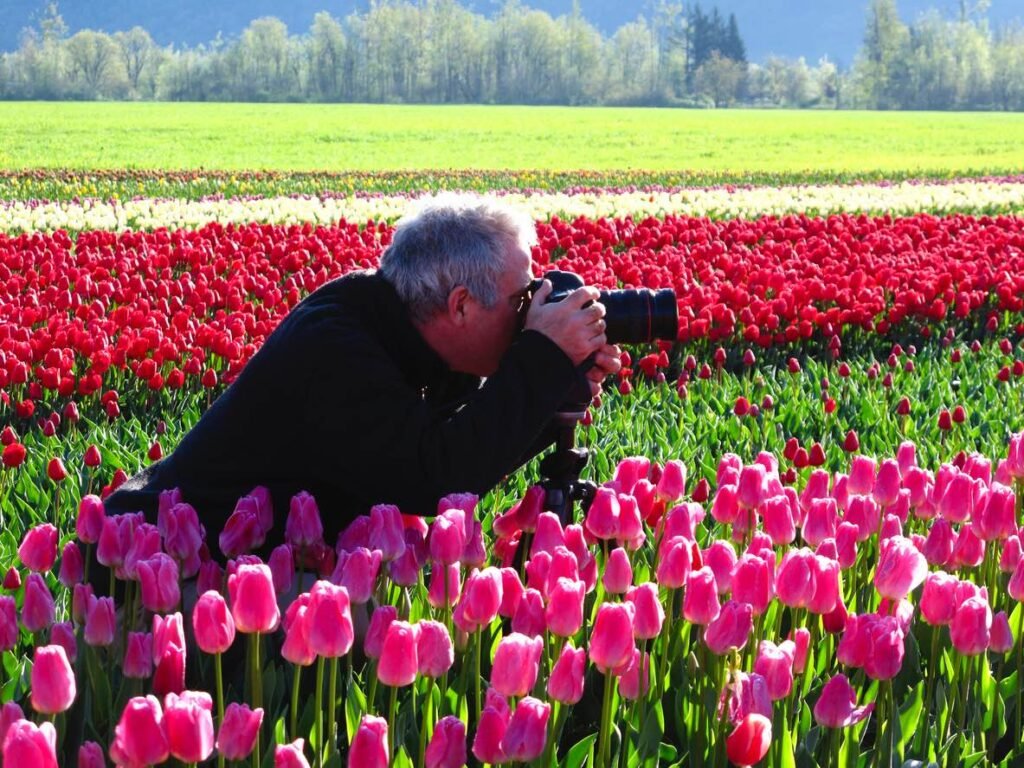
Spring flower photography in BC has become its own genre, with social media flooded by blossom and tulip images each season. Standing out requires some strategic thinking beyond just pointing cameras at flowers.
Timing matters enormously. Early morning light creates soft, flattering conditions before crowds arrive and harsh midday sun washes out colors. Late afternoon golden hour produces warm tones that enhance already vibrant flowers. Overcast days, common in BC spring, actually work wonderfully for flower photography, providing even lighting without harsh shadows.
Composition separates snapshot from photograph. Instead of photographing entire fields, isolate small groups or individual blooms. Use leading lines, rows of tulips, tree-lined streets, to draw eyes through images. Include human elements for scale and emotional connection, whether that’s children running through fields or couples walking under cherry blossom canopies.
Consider perspectives beyond eye level. Get low to shoot upward through flowers toward the sky. Climb elevated positions to capture pattern and scale of tulip fields. Experiment with shallow depth of field that blurs backgrounds while keeping foreground flowers sharp.
Respect farm property and regulations. Stay on designated paths, don’t pick flowers or damage plants for photos, and follow any photography guidelines venues establish. The goal is capturing beauty while ensuring flowers remain for other visitors and future seasons.
Practical Planning: Making the Most of Spring
Fraser Valley tulip festivals require advance planning. Popular dates, especially weekends during peak bloom, sell out weeks ahead. Purchase tickets online as soon as available, and consider weekday visits for smaller crowds and easier parking.
Dress practically regardless of photo aspirations. Tulip fields get muddy, during rainy spring weather. Wear boots (Blundstones or rubber boots) that you can wash afterward. Bring layers as weather shifts quickly, and remember that farm fields lack shelter when rain arrives.
Combine flower festivals with other Fraser Valley activities to maximize drive time from Vancouver. Waterfalls like Cascade Falls or Bridal Veil Falls sit near tulip farms. Farm markets, cideries, and agricultural experiences throughout the valley create full-day itineraries that go beyond just flower viewing.
Consider staying overnight in the Fraser Valley rather than cramming everything into day trips. Harrison Hot Springs Resort combines perfectly with Harrison Tulip Festival, soak in hot springs after walking tulip fields.
Vancouver cherry blossom viewing requires less formal planning, and blossoms are accessible throughout the city. But monitoring bloom forecasts helps timing visits to catch peak conditions. The Vancouver Cherry Blossom Festival website provides updates as the bloom season progresses.
Climate and Bloom Timing
BC’s spring weather creates both opportunities and challenges for flower festivals. Mild temperatures allow earlier blooming than many North American regions, but unpredictable rain can damage delicate blossoms or create muddy conditions that complicate visits.
Cherry blossoms particularly suffer from heavy rain or wind that strips petals before peak viewing. Following weather forecasts and grabbing opportunities during good-weather windows maximizes chances of seeing blossoms at their best.
Tulip timing varies year-to-year based on winter temperatures, spring warmth, and precipitation patterns. Farms provide regular bloom updates as season approaches, helping visitors plan optimal timing. Most festivals extend across multiple weeks specifically because different varieties bloom at different times, early visits capture some flowers while late visits catch others.
Climate change increasingly affects bloom timing, with warmer winters pushing earlier blooming dates while unusual cold snaps delay or damage flowers. This unpredictability makes advance ticket purchases slightly risky, you’re buying for specific dates before knowing exact bloom conditions, but most festivals provide reasonable flexibility or refunds if weather severely impacts experiences.
Why Spring Flowers Matter
Spring flower celebrations serve genuine purposes. They mark seasonal transitions, create community gathering opportunities, support agricultural businesses, and provide accessible nature appreciation that doesn’t require wilderness skills or expensive equipment.
The ritual of checking blossom forecasts, planning festival visits, and photographing flowers creates annual traditions that families maintain across generations. Parents who visited tulip festivals as children now bring their own kids, creating continuity and shared experiences that transcend individual seasons.
Educational opportunities abound too. Children watching tulips grow, learning about different varieties, understanding agricultural cycles, and appreciating where flowers come from gain knowledge that urban life increasingly obscures. These lessons matter more as populations concentrate in cities where connections to agriculture and nature require intentional effort.
The economic impact extends beyond farms and festivals. Restaurants, gas stations, accommodation providers, and countless other businesses benefit from seasonal flower tourism that draws people to areas they might not otherwise visit. This distributed economic benefit helps justify infrastructure investment and regional tourism promotion.
Planning Your Spring Adventure
Start planning now if you’re considering spring flower experiences. Check websites for Harrison Tulip Festival, Abbotsford Tulip Festival, and other Fraser Valley venues to monitor ticket sales and bloom forecasts. Sign up for Vancouver Cherry Blossom Festival updates to receive bloom timing information and event details.
Most importantly, embrace the ephemeral nature of spring flowers. They don’t last long, and they don’t wait for convenient schedules. The magic partly comes from their temporary nature, these spectacular displays exist for brief windows before disappearing for another year.
British Columbia’s spring flowers, Vancouver’s cherry blossoms and Fraser Valley’s tulips, create some of the province’s most anticipated and photographed seasonal events. Whether you’re a serious photographer, casual flower appreciator, or family seeking springtime activities, the diversity and accessibility of flower experiences ensures everyone finds their preferred way to celebrate spring’s arrival.
Plan your British Columbia adventures → here
Connect With Us
- Website: BritishColumbia.com
- Facebook: @BritishColumbiaDotCom
- Instagram: @britishcolumbiadotcom
- X (Twitter): @visitBCdotcom
- Email: info@britishcolumbia.com